
 By
By 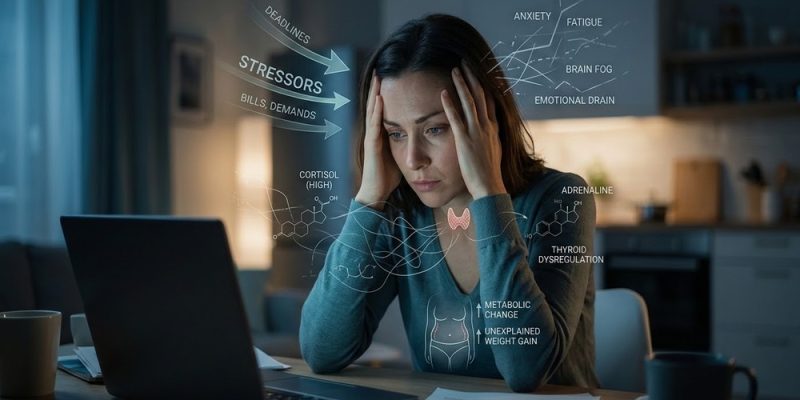
Stress is often treated as a normal part of modern life. Work pressure, financial strain, caregiving responsibilities, poor sleep, and constant digital stimulation can all become part of a person’s daily routine. While short-term stress can help the body respond to challenges, chronic stress is different. When the stress response stays active for weeks, months, or years, it can quietly affect nearly every major system in the body.
Many people notice the effects before they understand the cause. They may feel tired despite sleeping enough, gain weight without major changes in diet, feel anxious or low for no clear reason, or struggle with concentration. These symptoms are often viewed separately, but they can share a common thread. Long-term stress can influence hormone balance, metabolism, mood regulation, and sleep quality in ways that build on each other over time.
Understanding this connection can help patients and clinicians look beyond surface symptoms. A coordinated approach that includes mental health care, hormone evaluation, weight management, and primary care can make it easier to identify what is driving fatigue, weight changes, and emotional shifts.
How the Body Responds to Stress
The body’s stress response is designed for protection. When a person senses danger or pressure, the brain signals the adrenal glands to release stress hormones such as cortisol and adrenaline. These hormones increase heart rate, sharpen alertness, and make energy more available. In short bursts, this response is useful.
The problem begins when stress does not let up. If the body repeatedly receives signals that it needs to stay on high alert, cortisol patterns may become disrupted. Some people may feel wired at night and exhausted in the morning. Others may experience cravings, irritability, headaches, or digestive issues. The body is not failing; it is adapting to repeated stress signals.
Over time, this adaptation can affect several systems at once. Stress may influence blood sugar regulation, appetite, immune function, reproductive hormones, thyroid activity, and sleep cycles. Because these systems are connected, symptoms may not point to one obvious cause. This is why chronic stress can be difficult to recognize until it has already affected daily life.
Cortisol and Hormone Balance
Cortisol plays an important role in energy, inflammation control, blood pressure, and metabolism. It follows a natural daily rhythm, usually rising in the morning and falling at night. Chronic stress can interfere with this rhythm. When cortisol remains elevated or becomes poorly timed, the body may struggle to maintain balance.
Hormone symptoms can look different from person to person. Some may notice fatigue, low motivation, irregular menstrual cycles, reduced libido, or changes in muscle mass. Others may feel emotionally reactive or physically drained. In men, chronic stress may be associated with changes in testosterone levels, energy, and sexual health. In women, stress can affect estrogen, progesterone, and cycle regularity.
Mental health evaluation can also be part of this picture. For example, a licensed psychiatrist such as Equilibrio may help assess whether anxiety, depression, trauma, burnout, or other mental health factors are contributing to physical symptoms. This does not mean symptoms are “all in the mind.” Rather, it recognizes that the brain, hormones, and body communicate constantly.
Stress, Appetite, and Weight Gain
Stress can affect weight in several ways. Elevated cortisol may increase appetite, especially for calorie-dense foods that are high in sugar or fat. This is not simply a matter of willpower. Stress changes the body’s energy priorities and can increase cravings for quick fuel. People under chronic stress may also eat irregularly, snack late at night, or skip meals during the day and overeat later.
Stress can also reduce physical activity. Fatigue, low mood, and poor sleep can make exercise feel harder. At the same time, the body may become more efficient at storing energy, especially when stress is paired with inconsistent meals and disrupted sleep. Some people notice weight gain around the abdomen, which may be related to stress hormones, insulin resistance, and lifestyle changes that occur during prolonged stress.
Weight changes can be frustrating because they often happen gradually. A person may feel they are “doing everything the same” while their body responds differently than before. In these cases, looking at stress, sleep, medications, hormones, metabolic health, and eating patterns together may provide a clearer explanation than focusing on calories alone.
The Metabolic Effects of Chronic Stress
Metabolism is not just the speed at which the body burns calories. It includes how the body processes glucose, stores fat, builds muscle, regulates appetite, and uses energy. Chronic stress can affect all of these processes. When cortisol remains high, blood sugar may rise more often, and insulin may need to work harder. Over time, this may contribute to insulin resistance in some individuals.
Stress can also influence thyroid function indirectly. The thyroid helps regulate energy use, temperature, digestion, and overall metabolic pace. While stress may not be the only cause of thyroid changes, it can interact with inflammation, nutrient status, sleep loss, and other health conditions. This can leave patients feeling sluggish, cold, foggy, or unable to lose weight despite effort.
A medical weight loss center such as PhySlim may evaluate weight concerns through a personalized lens, considering metabolic factors, health history, medications, habits, and realistic treatment options. This type of support can be especially helpful when weight gain appears connected to fatigue, hormonal changes, or long-term stress rather than a single lifestyle factor.
Mood, Anxiety, and Emotional Regulation
Stress has a direct effect on the nervous system. When the brain remains alert to pressure or threat, it can become harder to regulate emotions. Small problems may feel overwhelming. A person may become more irritable, tearful, anxious, or withdrawn. They may also struggle to enjoy things that once felt meaningful.
Chronic stress can influence neurotransmitters such as serotonin, dopamine, and norepinephrine, which help regulate mood, motivation, focus, and pleasure. Sleep loss and hormonal changes can intensify these effects. This is one reason mental health symptoms and physical symptoms often appear together. A person may feel emotionally exhausted and physically unwell at the same time.
It is also important to distinguish everyday stress from clinical anxiety, depression, or trauma-related conditions. While lifestyle changes can help many people, some need professional mental health care, medication management, therapy, or a combination of supports. The goal is not to label every symptom as a disorder, but to identify when stress has become too heavy for the body and mind to manage alone.
Sleep Disruption and the Stress Cycle
Sleep is one of the first areas affected by chronic stress. A stressed brain may have trouble shifting into rest mode. People may lie awake replaying conversations, planning the next day, or feeling physically tense. Others fall asleep quickly but wake during the night or too early in the morning.
Poor sleep then worsens the stress response. It can raise hunger hormones, reduce insulin sensitivity, increase irritability, and lower tolerance for daily challenges. The next day, a person may rely on caffeine, skip exercise, crave sugar, or feel too tired to prepare balanced meals. These choices are understandable, but they can keep the stress cycle going.
Sleep issues should be taken seriously because they affect both mental and physical health. Evaluating sleep quality, bedtime habits, work schedules, alcohol use, pain, hormone changes, and possible sleep disorders can help uncover treatable causes. Better sleep does not solve every problem, but it often improves the body’s ability to recover.
When Stress Affects Aging, Recovery, and Chronic Conditions
The effects of stress can become more noticeable with age or during periods of health change. Recovery may take longer. Muscle mass may become harder to maintain. Energy may feel less stable. Chronic conditions such as high blood pressure, diabetes, autoimmune disease, or persistent pain may also become harder to manage when stress remains high.
Primary care plays an important role here. Routine lab work, medication review, blood pressure monitoring, and screening for chronic disease can help separate stress-related symptoms from other medical issues. Fatigue, weight gain, and mood changes should not automatically be blamed on stress without checking for anemia, thyroid disease, diabetes, vitamin deficiencies, medication side effects, or sleep disorders.
Forever Young Health Clinic, which focuses on optimal aging goals and enhancing overall well-being through peptide therapy, primary care, and chronic disease management, is an example of how care may include both prevention and ongoing medical support. In a stress-related health picture, this kind of broad clinical view can help patients avoid treating symptoms in isolation.
Hormonal Therapy and Men’s Health Considerations
Men may experience stress-related hormonal changes in ways that are easy to overlook. Fatigue, reduced libido, increased belly fat, lower mood, irritability, and loss of muscle can sometimes be dismissed as normal aging or work burnout. While aging can play a role, these symptoms may also relate to sleep quality, cortisol patterns, testosterone levels, metabolic health, alcohol use, medications, or chronic illness.
Testosterone is only one part of the picture. A careful evaluation may include symptoms, lab testing, medical history, cardiovascular risk factors, fertility goals, and lifestyle patterns. Hormonal therapy is not appropriate for everyone, and it should be considered with clinical supervision rather than as a quick solution for low energy or weight gain.
TRT and men’s health specialists in Minnesota, such as EveresT Men’s Health, may support patients who need evaluation for testosterone-related concerns and broader men’s health needs. In coordinated care, this type of specialty input can be useful when symptoms suggest that stress, hormones, and metabolic health may be overlapping.
Why Coordinated Care Matters
Chronic stress rarely affects only one part of health. A patient may first seek help for weight gain, then reveal sleep problems, mood changes, low libido, or fatigue. Another person may begin with anxiety and later discover thyroid imbalance, insulin resistance, or a medication side effect. Treating one symptom without considering the full pattern may lead to incomplete results.
Coordinated care helps connect the dots. A primary care clinician can screen for medical conditions and manage chronic disease. A mental health provider can assess emotional stress, anxiety, depression, burnout, or trauma. A hormone specialist can evaluate endocrine patterns when symptoms and lab results suggest an imbalance. A weight management clinician can address metabolic health, nutrition, movement, and treatment options.
This approach does not mean every patient needs every specialist. It means care should be guided by the person’s symptoms, history, goals, and test results. When clinicians communicate, and patients understand the links between stress, hormones, metabolism, mood, and sleep, the treatment plan can become more targeted and realistic.
Conclusion
Chronic stress can be quiet, but its effects are often wide-reaching. It may alter cortisol rhythms, disrupt sleep, influence appetite, affect weight, change mood, and interfere with hormone balance. These changes can build slowly, making them easy to mistake for normal aging, lack of discipline, or everyday fatigue.
A more useful approach is to view the body as an interconnected system. Fatigue, weight gain, emotional changes, and poor sleep may have several contributors at once. By combining mental health support, primary care, metabolic evaluation, and hormone expertise when appropriate, patients can better understand what is happening and choose care that addresses the underlying pattern rather than only the most visible symptom.
Stress may be common, but long-term suffering should not be ignored. Recognizing the hidden impact of chronic stress is often the first step toward restoring balance, improving daily function, and supporting long-term health.











Comments